Proactive Incident Management
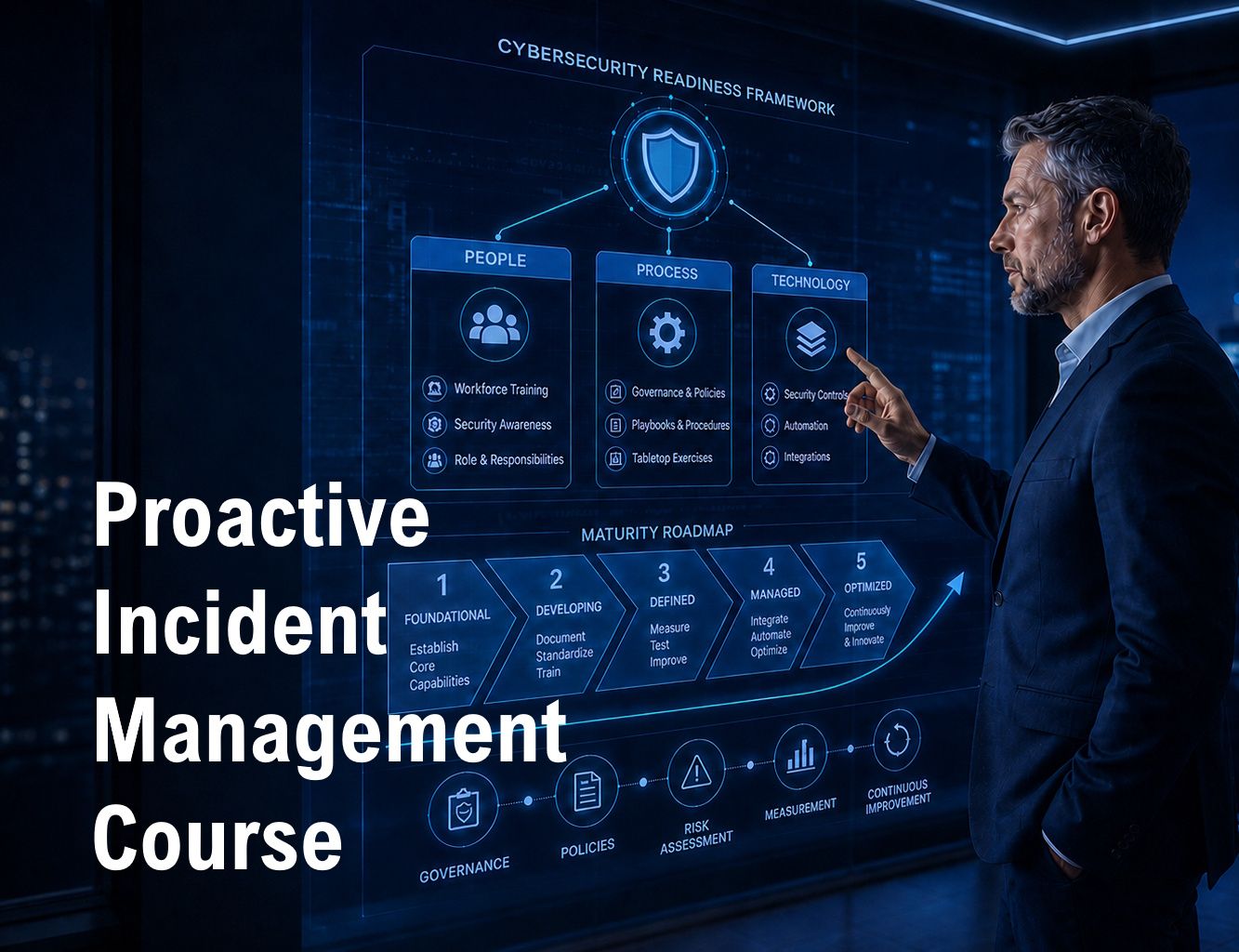
Embark on a transformative journey in cybersecurity with the Proactive Incident Management course, a comprehensive guide to mastering one of the most critical aspects of modern cybersecurity. This course will equip you with the skills to anticipate, prepare for, and mitigate cyber threats before they escalate into full-blown incidents. Whether you're an IT professional looking to elevate your expertise or a cybersecurity specialist aiming to broaden your skill set, this course will sharpen your strategic approach to incident management.
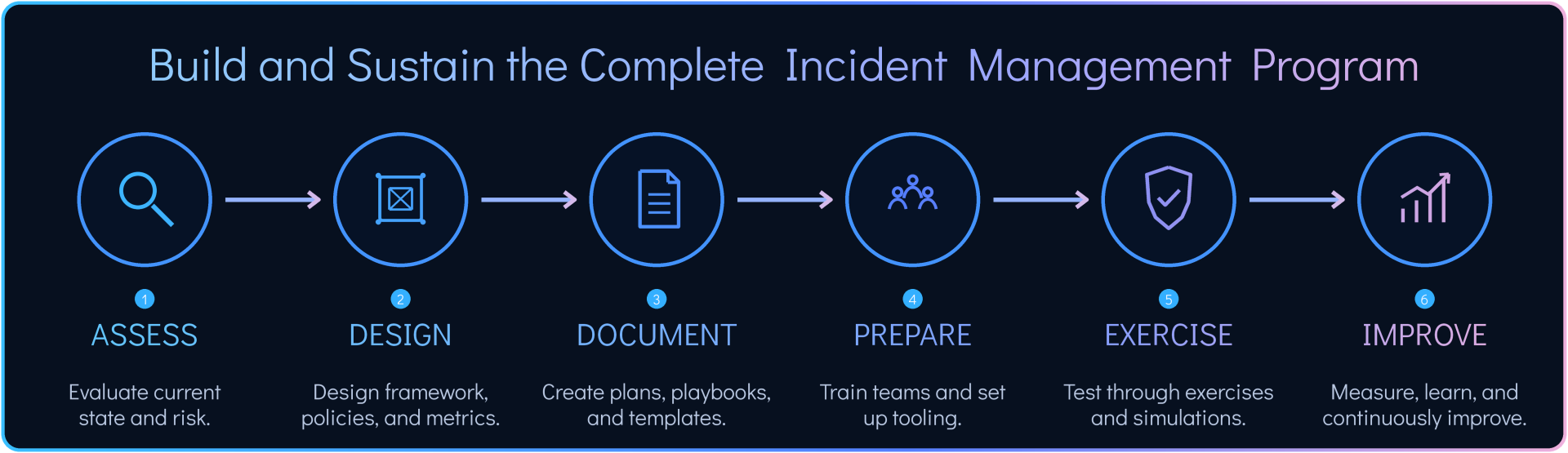
Through this course, you will delve into foundational concepts like building and maintaining an Incident Management Framework (IMF) tailored to organizational needs. You’ll learn how to design robust identification, communication, and response mechanisms to detect and neutralize threats early. Gain hands-on knowledge in creating playbooks, implementing effective containment strategies, and conducting post-incident reviews to refine your processes. The course also emphasizes legal and regulatory compliance, helping you ensure your incident management practices align with industry standards and protect your organization from costly fines and breaches.
By the end of the course, you’ll not only have the technical skills to manage incidents proactively but also the confidence to lead cross-functional teams through complex challenges. Your ability to combine people, processes, and technology into a seamless defense mechanism will position you as a critical asset in your organization. This course is more than just education—it’s an investment in your professional future, providing the tools you need to thrive in today’s cybersecurity landscape.
Upon completing the course, you’ll be prepared to take the CSMG Certified Program Developer (CCPD) Certification exam, showcasing your expertise to employers and peers. This certification one in a suite of specialized courses and certifications that can build your skills across the spectrum of cybersecurity incident management. Take the leap today—your journey to becoming a proactive incident management expert starts here.
- 6 months access to the on-demand course including eBooks, videos and practical real world labs.
- After completing this course, you qualify to take the exam to earn your CSMG Certified Program Developer (CCPD) Certification.
- A printed copy of Cybersecurity Incident Management Masters Guide, volume 2.
The Proactive Incident Response course offers extensive hands-on labs designed to immerse you in real-world incident response scenarios, ensuring you gain the practical skills needed to excel in advanced cybersecurity roles. These labs provide a controlled, interactive environment where you’ll apply critical techniques in identifying, containing, and mitigating cyber threats. Each exercise reinforces key concepts from the course, allowing you to see how theory translates directly into practice. By working through realistic simulations, you’ll develop the confidence and expertise to anticipate and manage complex incidents in live environments. These hands-on experiences not only deepen your understanding of proactive incident management but also prepare you to respond effectively to the ever-changing cybersecurity landscape. Take this opportunity to elevate your skills and stand out as a leader in cybersecurity.
- Comprehensive understanding of incident management: The course provides a detailed framework for understanding and managing cybersecurity incidents. This includes all phases of the incident lifecycle, from preparation and detection to eradication and post-incident analysis.
- Proactive approach to cybersecurity: The materials emphasize the importance of proactively identifying and addressing potential threats and vulnerabilities to prevent incidents from occurring in the first place. This can help businesses save time, money, and resources in the long run.
- Practical application of knowledge: The course includes hands-on labs and case studies that allow students to apply the concepts learned in the course to real-world scenarios. This helps students develop practical skills that can be used immediately in their jobs. For instance, labs include executing a tabletop exercise based on a specific threat scenario.
- Improved communication and collaboration: The course highlights the importance of effective communication and collaboration between different teams and stakeholders during an incident. This can help ensure a more efficient and successful response.
- Enhanced security posture: By understanding the threat landscape, implementing appropriate security controls, and developing a robust incident management program, businesses can improve their overall security posture and reduce their risk of cyberattacks.
- Regulatory compliance: The book and course cover relevant regulatory compliance standards, such as HIPAA, PCI-DSS, and GLBA. By understanding these standards, businesses can ensure they are meeting their legal obligations and avoid costly fines and penalties.
- Improved documentation practices: The course stresses the importance of comprehensive and effective documentation for incident response and management. This includes developing incident response plans, playbooks, analysis guidelines, and other supporting documents. Clear and organized documentation helps with incident reporting, auditing, and potential legal proceedings.
- Continuous improvement: Incident management is an ongoing process that requires continuous improvement. The course emphasizes the importance of learning from past incidents, adapting to the evolving threat landscape, and regularly updating the incident management program to ensure its effectiveness.
- Career advancement: By completing the Proactive Incident Management course, participants would gain valuable skills and knowledge that could enhance their career prospects. The certification would demonstrate proficiency in incident management and proactive security practices, making them sought-after professionals in the cybersecurity industry.
By taking the Proactive Incident Management course professionals can acquire valuable skills and knowledge to manage and mitigate cybersecurity risks, improve organizational security posture, and advance their careers in this critical field.
Certification: Completing the Proactive Incident Management course sets you up for a significant career milestone: qualifying to take the CSMG Certified Program Developer (CCPD) Certification exam. Earning this certification positions you as a top-tier cybersecurity professional, validating your mastery in swift, effective response to high-impact security incidents. With this certification, you’ll demonstrate to employers that you possess advanced skills in proactively managing and mitigating cybersecurity risks by anticipating, preventing, and responding to cyber threats throughout all phases of the incident lifecycle. —skills highly sought after for senior roles like Incident Commander, Lead Incident Responder, or Security Operations Manager.
Master Every Stage of Cybersecurity Incident Management
Earning your CSMG Certified Program Developer (CCPD) Certification is just the beginning of your cybersecurity leadership journey. To become a highly sought-after cybersecurity expert, we encourage you to continue through the full Cybersecurity Masters Guides certification path. Each course builds upon the last, strengthening your skills and expanding your career opportunities:
-
Reactive Incident Management – Learn how to detect, respond to, contain, and mitigate cybersecurity incidents and qualify for the CSMG Certified Incident Manager (CCIM) certification.
-
Cybersecurity Incident Command – Learn to lead large-scale incident response efforts and earn the CSMG Certified Incident Commander (CCIC) certification.
-
Cybersecurity & Solutions Architecture – Learn to design secure infrastructures that protect organizations from evolving cyber threats and achieve the CSMG Certified Solutions Architect (CCSA) certification.
Each certification strengthens your ability to respond, prevent, and lead in cybersecurity, making you a top candidate for high-paying roles like Incident Commander, Security Architect, and Cybersecurity Director. Employers prioritize professionals with a full suite of incident management skills, giving you a competitive edge in the job market. Don’t stop at one certification—become an elite cybersecurity leader by completing the full program!
This course is designed for individuals with a foundational understanding of technology, networking, and security principles. It is not a beginner course; rather, it presumes some practical experience in cybersecurity or IT operations, particularly with core security concepts, risk management, and network infrastructure. Participants are expected to be comfortable navigating security protocols, network configurations, and basic threat concepts to fully benefit from the advanced incident management and response strategies covered.